Why the belly won't budge: insulin
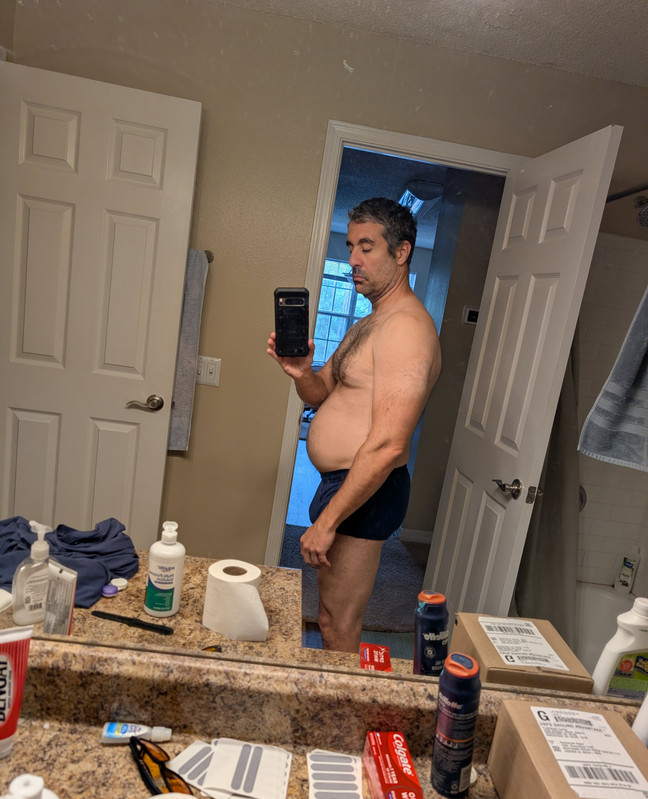
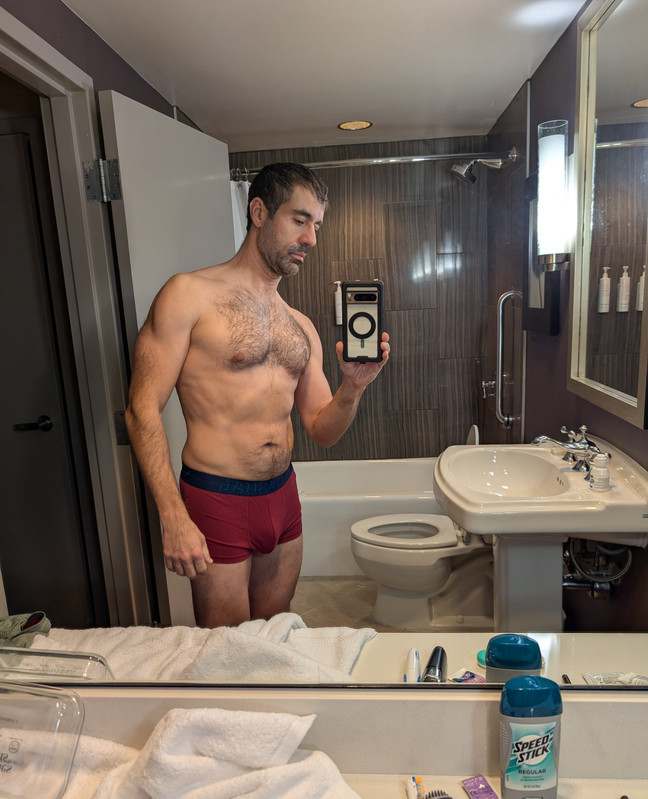
Welcome to lesson 1.5. Yesterday was the big picture. Today is the science behind it, in plain words. It's a little more academic than the other lessons.
Most men skip the “why” and go straight to the next diet. You're here, reading the science. That's the kind of man who doesn't get fooled twice. Stay with me, because this explains why cutting back harder never moved your belly.
What you're getting today
- What insulin resistance is, and why a belly is the first sign
- The research: same weight lost, a very different body
- The two things that fix it (you'll get both in this course)
Why it matters
You've been told it's calories in, calories out. Eat less, lose weight. That's half true. Calories decide how much weight you lose. They don't decide what you lose. A hormone called insulin has a big say in that.
Lose 20 pounds and if a big part of it is muscle, you end up smaller and softer, with the same belly. Skinny fat. Lighter, but nobody would call it a transformation, least of all you.
How this helps you
You stop chasing the scale. You eat and train so the weight comes off your belly and your muscle stays. That's the difference between looking lighter and looking lean. One of them people notice.
Part 1: insulin resistance, in plain words
Think of it like this. When you eat, sugar from your food goes into your blood. Your muscles need that sugar for energy, but they're like locked rooms. Insulin is the key. It unlocks the door so the sugar can get in. Now picture a lot of belly fat. It makes the locks rusty. The key still turns, but barely. That's insulin resistance. So your body makes more and more keys to get the doors open. And when your blood is full of keys, it gets a clear message: store fat, don't burn it.
That hard belly fat, the kind packed around your organs, is the worst for this. The more of it you carry, the rustier the locks get.
That's why the belly that showed up after 40 seems to grow by itself. It's not your character, and it's not your age. It's a loop. And loops can be broken.
Part 2: same weight, different body
Researchers at Harvard Medical School, led by Dr. David Ludwig, went back over two big feeding studies of adults carrying extra weight. Everyone ate fewer calories for 10 to 14 weeks and lost 10 to 18% of their body weight.
The people whose bodies made the most insulin lost less of that weight as fat and more of it as muscle. They also kept more fat around the middle. Same diet. Same weight lost. A worse body at the end.
That's exactly what I lived: six months in the gym without the right macros, and the belly barely moved. Half a plan, half a result.
Wong JMW, Ludwig DS, et al. Journal of Nutrition, 2022.
Part 3: the fix: lift, and eat the right macros
Now the good news, and it comes from right here in Birmingham. Researchers at UAB put 127 people with extra weight on a strict diet until they reached a normal weight. Not athletes. Ordinary people with jobs and families, carrying weight they wanted gone. Some only dieted. Some added cardio. Some added weight training, 3 days a week.
In the diet-only group, the people with the worst insulin response lost the most muscle. In the groups that exercised, that link disappeared. And the weight-training group actually gained lean mass while they lost the weight. Ordinary people, doing both halves, ended up with a better body than the ones who only dieted. That's not a theory about you. It's what already happened to people a lot like you.
Why? When a muscle works hard, it pulls sugar out of your blood on its own. It doesn't need insulin to do it. Lifting goes around the broken signal.
Now the food. You MUST switch to whole foods. Processed food (chips, cookies, pastries, soda, sugary cereal, fast food) is built from sugar and refined flour, usually mixed with cheap fat. Your body breaks it down into blood sugar fast, all at once. That's a flood of sugar, then a flood of insulin, the exact thing that keeps the loop running. And it's made so you can't stop eating it.
Whole foods are different: chicken, steak, eggs, Greek yogurt, rice, oats, potatoes, fruit, vegetables. Food that looks like it did when it was grown or raised. It comes with protein, fiber and water. It fills you up, and you'd struggle to overeat it. You don't have to cut carbs. You have to cut the junk.
So the fix is the same two halves from lesson 1. Diet alone makes you lighter but still soft. The gym alone makes you stronger, but the belly stays. Only both, together, gets the belly gone.
- Lift 4 days a week. Hard enough that the last 2 reps are a fight. Lessons 4 and 5 give you the exact plan.
- Eat the right macros. 40% protein, 35% carbs, 25% fat, spread over 3 to 4 meals. From whole foods. Not keto. Not one meal a day. Lesson 2 gives you your numbers.
And as the belly fat comes off, your body starts listening to insulin again. The loop runs the other way, and every week it gets a little easier. That's the part nobody tells you.
Bartholomew CL, Martins C, Gower B. Obesity, 2025.
Next: tomorrow, why the belly that showed up after 40 never leaves on its own, and the one change that finally moved mine.
The coaching program
From Fat to Lean
1-on-1 Body Transformation for Men 40+
Reading the plan is one thing. Running it every day for six months is another. You need someone in your corner to make sure you level up. That’s what Fat to Lean is for — the whole plan, built around you.
Here is what you get:
- A nutrition plan from the foods you like
- Workouts for your body, your schedule and your gym, even a hotel gym
- A customized plan for the hard weeks: travel, holidays, a work conference
- A plan that changes as you go, so the fat stays off
- A weekly check-in call, plus my direct line
You’re covered two ways. Follow the plan, and if you don’t reach the goal we set together, I’ll refund you. And I don’t work alone — I’m part of a private group of coaches who transform men’s bodies for a living. You get their help indirectly through me, and when a case is difficult, I bring it to them to make sure you reach your goal.
See if you’re a fit for the Fat to Lean 1-on-1 coaching program
Fill out the short application below. It takes about 2 minutes.
Máni
Not medical advice. Talk to your doctor before you start a new exercise program or change your diet. The photos and numbers are my own results; yours will vary.